thanks for stopping by!
DESIGN-A-THON
Kindred: Reimagining Kidney Paired Donation through Human Connection
Project Overview
Living donor kidney transplantation offers patients with kidney failure the best long-term outcomes, yet thousands of willing donors and recipients never reach transplant due to compatibility barriers. During UC San Diego's REIMAGINE Design-a-thon, our team set out to explore how design could help more patients successfully navigate this journey.
The result was Kindred, a compassionate digital companion that helps incompatible donor-recipient pairs discover new pathways to transplant through paired kidney donation while fostering trust, transparency, and support throughout the process.
Product Designer
Research & Strategy
4 Product Designers--
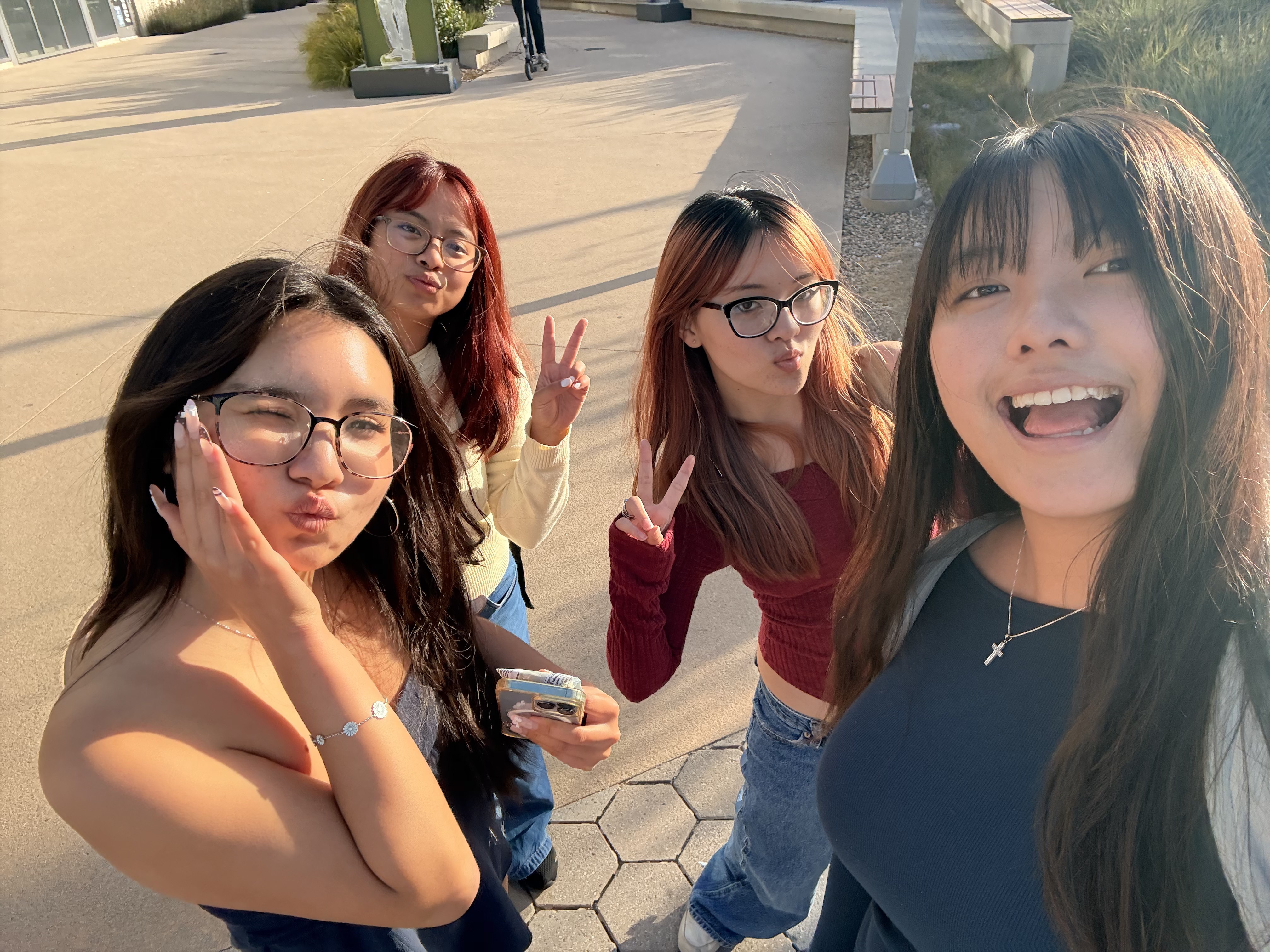
Renee Lau, Sophie Wong, Daniella Benigno, and Linh Dinh (me!)
Figma, Google Workspace, Canva
2 days
May 16-17, 2026
MY ROLE
TEAM DSLR
TIMELINE
TOOLS


Through discussions with transplant professionals and patients, we uncovered a surprising reality.
Initially, our team believed the primary opportunity was individual-based, and that we would create a platform catered to either individual patients or potential donors. Our conversations introduced a more nuanced challenge.
"Some donors are very motivated to donate, but once they felt like the recipient wasn't taking care of themselves, they step back from the process."
“Patients frequently depend on transplant centers to manage the process and have limited ability to explore options themselves.”
“Currently there are 3 separate centers that organize PKDs — usually transplant centers only work with one.”
Patients often navigate multiple transplant centers, networks, and administrative systems with little visibility into how matching occurs.
Trust, motivation, and communication play critical roles.
Patients frequently depend on transplant centers to manage the process and have limited ability to explore options themselves.
-Dr. Mita Shah,
Nephrologist
-Dr. Nancy Marlin,
Living Kidney Donation Recipient
-Dr Jennifer Berumen,
Associate Professor of Transplant and Hepatobilliary Surgery
At UC San Diego’s REIMAGINE Design-a-thon, we were tasked with one single question.
How might we reimagine the living donor journey through a compassionate digital companion that reduces barriers, strengthens human connection, and helps more patients successfully receive living donor kidney transplants (LDKTs)?
As our research deepened, we shifted our focus toward kidney paired donation (KPD). We found that:
1 in 3 potential living kidney donor-recipient pairs are deemed incompatible.
Over half of donor-recipient pairs were not able to move forward with LDKT due to incompatibility.
The current KPD system is fragmented across 3 competing networks (NKR, APKD, OPTN) that don't share pools.
Real Potential in KPD
Paired kidney exchanges have surged in the U.S., growing from just 473 transplants in 2011 to over 1,100 annually. Today, KPD accounts for up to 40% in highly sensitized patients, significantly expanding the donor pool. In 2021 alone, 1 in 5 living donor kidney transplants were facilitated by KPD.
It became clear that the problem was the untapped potential of kidney paired donation and the barriers preventing patients from fully benefiting from it.
So, we decided to ask:
Visualizing Patient Friction & Emotional Lows for the Typical Kidney Transplant Journey
To identify systemic gaps in the living donor process, we mapped the end-to-end patient experience from initial diagnosis to recovery. By visualizing the critical emotional drop-offs—particularly the high rate of biological incompatibility during the matching phase—this journey map highlighted a massive opportunity to transform the burden of searching from the patient to emphasize autonomy and nurturing a larger, supportive network.

Prioritizing Features for Impact
To transition from ideation to execution, I mapped our feature concepts onto an Importance vs. Urgency matrix. This framework allowed us to separate immediate MVP requirements, such as network pairing, conversational tools, and centralized health resources. By focusing design efforts on the High Importance / High Urgency quadrant, we ensured our immediate solution directly solved the most critical friction points for patients and donor pairs.

Kindred shifts the experience from a fragmented administrative process into a transparent and human-centered journey.
Why Our Solution Matters
Kindred acts as the connective tissue that strengthens existing transplant infrastructure. By optimizing community pooling and streamlining the onboarding process, Kindred aims to unlock up to a 50% increase in active registry participation from pairs who would otherwise abandon their search out of frustration.
Rather than replacing existing transplant systems, Kindred strengthens them by making them more accessible and human-centered.
Lessons from My First Design-a-thon
As my first experience in competing in a design-a-thon, building Kindred with my team was an intense, rewarding masterclass in rapid product development and design.
Learning to Let Go
With a strict timeframe, I learned to let go of perfectionism. Moving from Post-it notes to rapid sketching in 2 hours taught me to prioritize high-volume ideation over the perfect UI, which helped us shape the key functions of our platform.
Research is Key
I realized that even in a fast-paced sprint, grounding our logic in user and primary research is key. Our team spent hours and hours researching the problem space through primary accounts, existing literature, and interviewing key stakeholders and subject-area experts. What made our solution unique was not only the visually nice prototype, but a genuinely impactful solution that takes account of one of the many root causes.
The Secret to the “Perfect Team”
Working with a new team under pressure naturally brings diverse opinions. Through this design-a-thon, I learned that healthy friction is vital for pressure-testing concepts. Our team clashed on multiple fronts, and not because we did not believe in each others’ ideas, but because we naturally wanted to challenge each other and push for depth in our thinking and solutions. As a result, we delivered an MVP that was far more rigorous, intentional, and grounded in real patient needs than any single one of us could have built alone. Ironically, the tension brought us even closer, in addition to our outdoor breaks.
How might we optimize kidney paired donation to increase successful living donor kidney transplants for incompatible pairs?
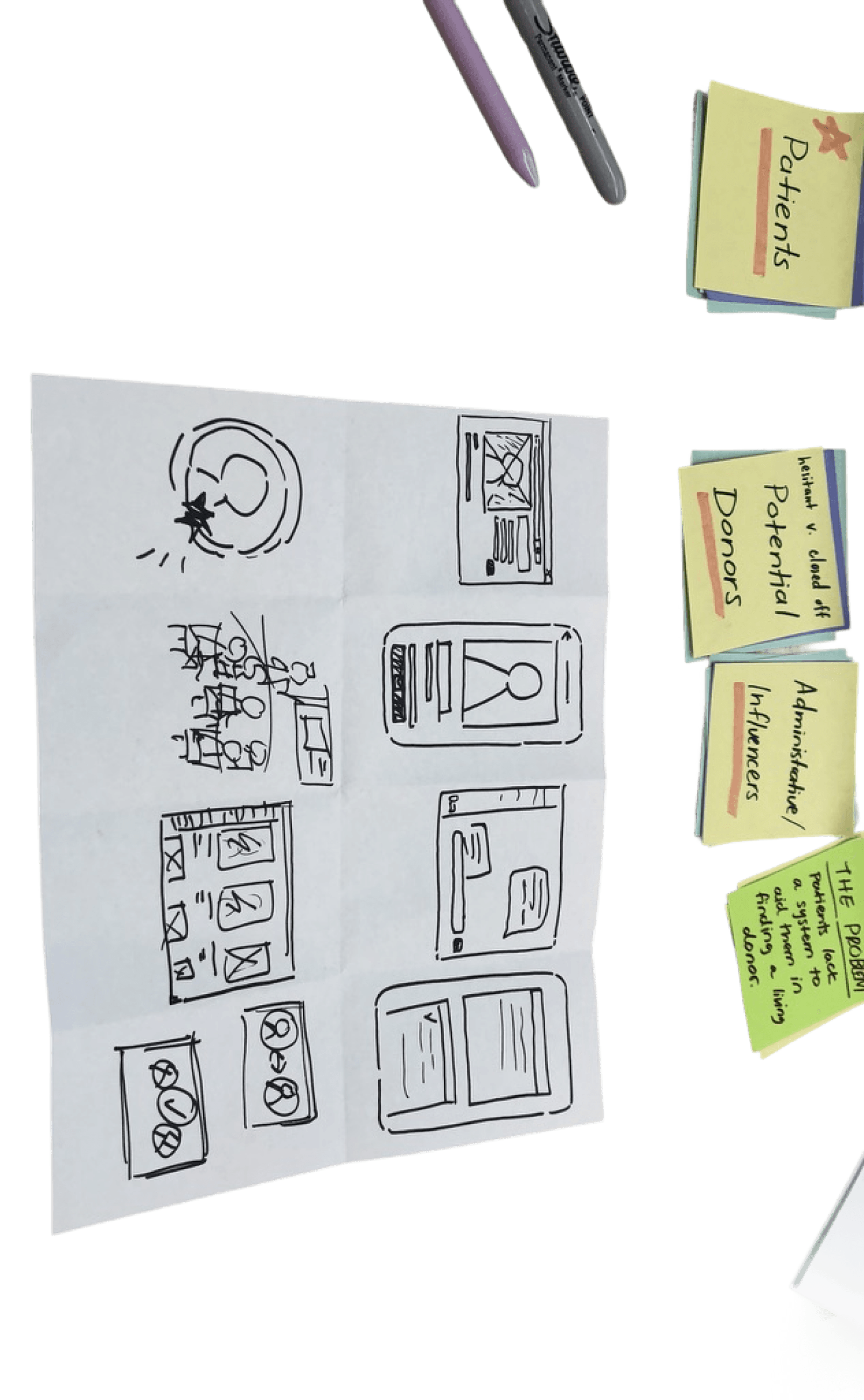
From Post-Its to Rapid Prototyping
We conducted 4 rounds of iteration in just under 2 hours.
To quickly translate our prioritized features into tangible concepts, we ran a high-speed, 2-hour rapid prototyping session. Moving from Post-it notes to quick, low-fidelity sketches, our goal was absolute quantity over perfection.
We explored as many layout variations and user flows as possible. We immediately pressure-tested these rough concepts by gathering real-time feedback from design mentors, allowing us to confidently strip away the noise, refine our core functions, and align on a solid blueprint for our high-fidelity designs.
After gathering and synthesizing our feedback, we immediately jumped into creating our visual mockups, wire-framing and finalizing our high-fidelity screens in just 5 hours.



Introducing Our MVP: Kindred
Kindred is a patient-centered platform that helps incompatible donor-recipient pairs discover compatible matches while providing the support and transparency often missing from the transplant journey. Our solution focuses on 3 pillars:
Introducing Our MVP: Kindred
Kindred is a patient-centered platform that helps incompatible donor-recipient pairs discover compatible matches while providing the support and transparency often missing from the transplant journey. Our solution focuses on 3 pillars:
Match
Engage
Connect
An intelligent matching experience that connects incompatible donor-recipient pairs with other compatible pairs and clearly communicates why a match exists.
Resources for centers, support groups, finances, and screening.
A guided communication experience helping pairs build trust and navigate next steps.

And special thanks to Renee, Sophie, and Daniella for being some of the greatest designers I have had the pleasure working with! ☘︎
Thank you to the Design Lab and REIMAGINE Center for this unforgettable learning experience.