UX CONCEPT
Incentivizing shoppers to make sustainable fashion purchases
The fast fashion industry contributes to 10% of global CO2 emissions.
Yet many Gen Z and Millennial consumers lack transparent information to make informed choices on the clothes they purchase. While interest in sustainable living is growing, accessible and engaging resources that translate awareness into action remain limited. As a result, consumers often struggle to understand the true environmental impact of their purchases or how to adopt more sustainable habits in a practical, everyday way.
Project Overview
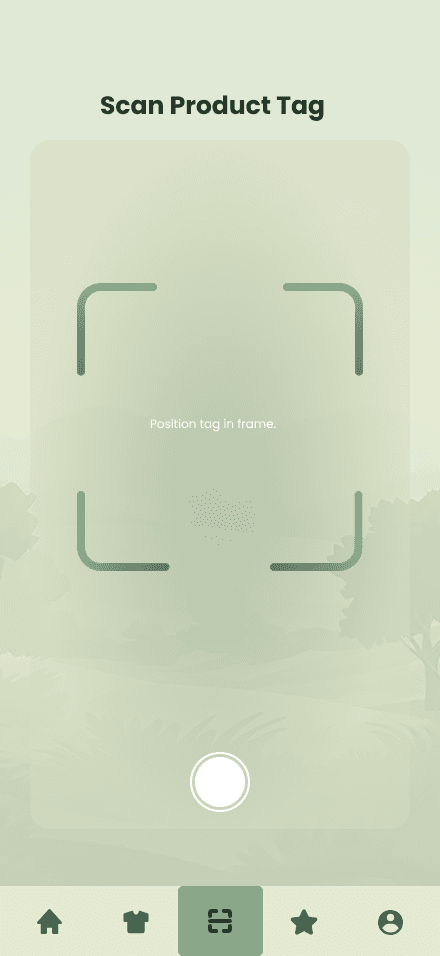
Green Scan is a mock startup developed for UC San Diego’s SYN 100: Climate Change and the Green Economy course. Our team set out to address the environmental impact of the fashion industry by creating a mobile app that empowers shoppers to make more sustainable choices. The app allows users to scan clothing tags to instantly view information about each item’s environmental footprint, materials, and ethical sourcing.
Our goal was to explore how technology and design can drive consumer awareness and support a more circular, transparent fashion economy.
Product Designer
1 Product Designer
1 Executive Office
1 Financial Officer
1 Marketing Office
1 Operations Officer
Figma, Canva, Google Workspace
10 weeks
April - June 2025
MY ROLE
TEAM
TIMELINE
TOOLS



PROBLEM STATEMENT
How might we make it easier for shoppers to access trustworthy information about the environmental impact of their purchases and encourage them to choose more sustainable alternatives?
Developing the initial concept through lo-fi sketches
These sketches show my first concepts for the Green Scan app’s flow and layout. I mapped out the main screens, including the login, homepage, scanner, rewards, and profile pages, to visualize how users would navigate the app. My goal was to make sustainable shopping feel approachable and fun, using a friendly mascot and soft green tones. I focused on clear interactions like scanning tags, earning rewards, and tracking progress to keep the experience simple and engaging.

Key Features
We conducted informal user testing sessions with peers to evaluate the clarity, usability, and appeal of the Green Scan prototype. Participants were asked to complete key tasks such as scanning a tag, viewing sustainability details, and redeeming rewards. Feedback highlighted that users enjoyed the friendly visuals and gamified features but wanted clearer navigation cues and more detailed product information.
Based on this input, we refined the layout, improved button labels, and adjusted the flow to make our high-fidelity prototype of Green Scan more intuitive and informative.
Accessing challenges, recent scans, and recommended eco-friendly and sustainably-driven brands for users to check out.
Short, interactive quizzes educate users about sustainable fashion while rewarding them with points.
Comprehensive data base of brand sustainability information and ratings.
Access clear sustainability metrics such as material sourcing, production practices, and environmental impact.
When a scanned item has a high environmental footprint, the app suggests eco-friendly “dupes” or sustainable alternatives.
Users can redeem points for discounts, at partnered sustainable brands. Discount "coupons" saved to users' accounts.
Homepage + Reading Quiz
Brand Search
Sustainability data through scanning product tag
Rewards
Impact
Although Green Scan is a conceptual product, it demonstrates strong potential to influence more sustainable consumer behavior by making environmental information immediate, visible, and actionable at the point of purchase. By translating complex sustainability data into a simple scanning experience, the app lowers the barrier for Gen Z and Millennial shoppers to make informed decisions.
In a broader context, a tool like Green Scan could support a more transparent fashion ecosystem by increasing demand for ethical production and holding brands more accountable.
Reflection and Key Takeaways
This project taught me how to design for behavior change, not just usability. I learned that presenting information clearly isn’t enough. Users need motivation and reinforcement to actually act on that information. Balancing education, accessibility, and engagement was key to making the experience feel both meaningful and approachable.
If I were to continue this project, I would focus more on validating the data layer behind the app. Since sustainability metrics can be complex and sometimes inconsistent across sources, ensuring credibility and transparency in how information is calculated would be critical. I would also conduct more in-depth user testing beyond peers, especially with frequent shoppers, to better understand real-world usage and decision-making at the point of purchase.
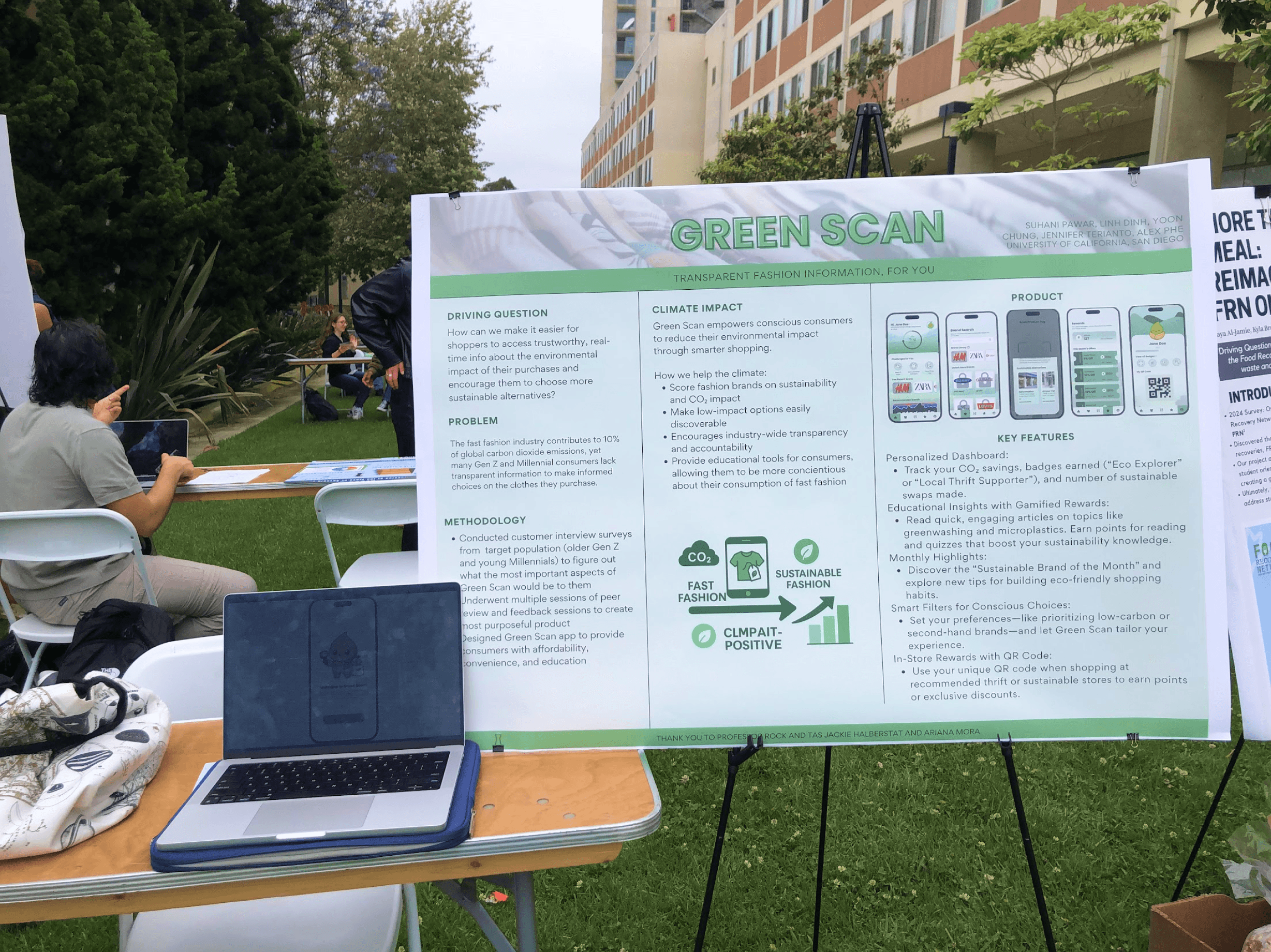
Thank you to the Green Scan team for an amazing project experience, and to Professor Rock for all of your guidance! ☘︎
Conducting user surveys
We conducted a Google Form survey with 29 Gen Z and Millennial shoppers to understand shopping habits and attitudes toward sustainability. These were our results anf findings:
Price as a factor
45% of participants listed price as a top priority when shopping.
Sustainable Alternatives
Many expressed interest in eco-friendly “dupes” and affordable sustainable options.
Transparency
Users do not have clear details on materials and manufacturing processes.
Engagement
Often motivated by rewards or points systems in other shopping apps.




thanks for stopping by!