Wireframing

This wireframe was our initial lo-fi prototype, mapping the full user flow and including basic info screens and interactive selection cards. It helped us refine the structure and content, leading to clearer wording and improved layout in the final design.


Physical Kiosk


We translated our digital concept into a tangible kiosk prototype to better understand how the experience would function in a real retail environment. The final design features a taller, slimmer structure with a rounded top to create a modern and approachable presence in-store, while supporting the tablet screen.
Impact
As a conceptual prototype, our Style Up kiosk highlights the potential for retailers like Uniqlo to bridge the gap between digital personalization and physical shopping, creating a more guided and enjoyable in-store journey. The kiosk concept demonstrates how in-store technology can meaningfully enhance the retail experience by making outfit discovery more personalized, efficient, and engaging. The system reduces decision fatigue and supports shoppers who struggle with fit, sizing, and styling confidence.
Reflection
For this project, we aimed to create a kiosk that would enhance the traditional shopping experience for clothing retail stores. Through this process, we learned and executed a variety of (digital and physical) prototyping skills that allowed us to deliver a seamless and interactive solution to the challenge. This project allowed us to participate in real user research and create tangible products from it. As we conclude this journey, we were able to bring our vision to life through an interactive and personalized system!

Thank you to Team Rice for making this project one of my greatest joys! ⋆. 𐙚 ˚
Key Interactions
UX CONCEPT
Interactive kiosk to boost purchase confidence for Uniqlo shoppers
Project Overview
Created for DSGN 100 at UCSD, Style Up is a concept for an in-store kiosk at Uniqlo that offers personalized outfit recommendations using quick style quizzes and inventory data. The project focuses on enhancing the retail experience by helping shoppers find clothing that matches their style, fit, and comfort preferences.
Our goal is to blend technology and human-centered design to make fashion selection more efficient, engaging, and tailored to individual needs.
Product Designer
3 Product Designer
Figma, Laser cutter, Inkscape, Adobe Illustrator
11 weeks
Jan-Jun 2025
MY ROLE
TEAM
TIMELINE
TOOLS


PROBLEM STATEMENT
How can we enhance the traditional shopping experience for consumers and ease the process of finding clothes that suit their preferences?
The Problem
Clothing retail is a dynamic and personal industry that is rapidly changing and growing throughout the years. However, traditional shopping can overwhelming and inefficient.
In-person shopping
45% of consumers prefer in-store shopping.
Frustrations include time-consuming process and difficulty in finding specific items in-store.
Positive customer experiences linked to friendly interactions with staff, shorter wait times, and overall efficiency.
Online shopping
29% of consumers prefer online, with hybrid methods rising in popularity (order online, pick-up in-store)
Frustrations in false marketing and making returns (e.g. shipping costs, time spent)
For apparel: 65% of returns are due to sizing issues (56% for damaged items and 44% for just disliking it).
Technology
80% of in-store shoppers like the idea of a non-traditional checkout.
Reduced wait times are a key benefits of the self-checkout.
Contactless payment, Just Walk Out technology
Virtual Try-On Mirrors use augmented reality to try on items without needing to put them on (some have purchasing options).
Diving deeper into the world of apparel
Our team visited UTC to conduct our fieldwork. We observed the following stores: Reformation, Uniqlo, Nordstrom, Sephora, and Zara.
It revealed that apparel shopping is highly tactile and experiential. Shoppers rely on trying items on, feeling fabrics, and using mirrors to evaluate fit and appearance. Many also seek second opinions, highlighting the social and confidence-driven nature of clothing decisions. However, the process is often time-consuming and inefficient, especially when locating the right size or style within stores.


Defining our audience
We developed primary and secondary personas based on our research to represent a range of shoppers with different needs, from those seeking styling guidance to those focused on fit and efficiency. These personas helped us stay grounded in real user behaviors and informed key design decisions throughout the kiosk experience.


Storyboarding— crafting our users’ stories
Fitting Room Fiasco
Color Catastophe
"We Never Go Out of Style"


Forming a moodboard and style guide
Our final moodboard established a calm, cozy, and approachable aesthetic, shifting from K-beauty-inspired pink tones to a more neutral and inclusive palette. This direction informed a soft, welcoming visual system using warm neutrals, rounded UI elements, and clean typography to reinforce an inviting kiosk experience.


Building our concept through initial sketching
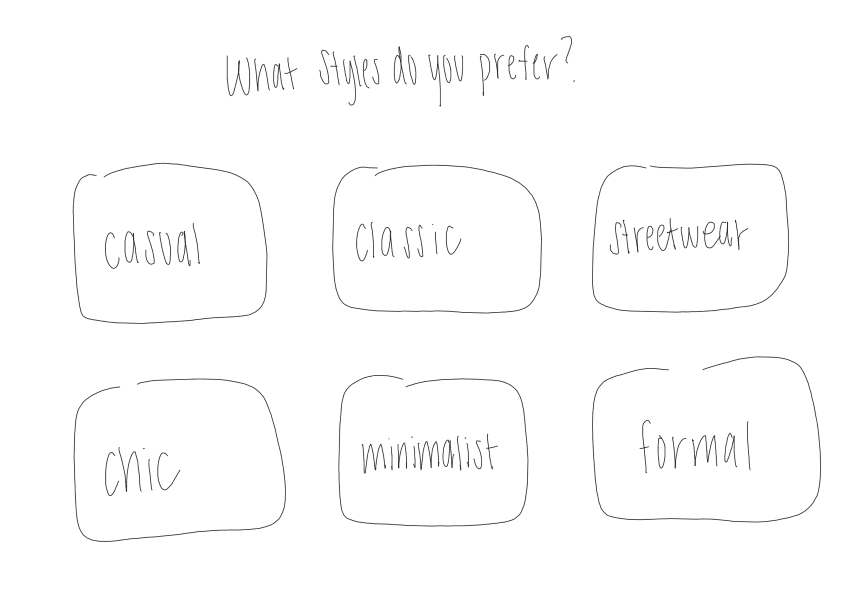
Our early wireframing ideas that helped shape the finalized UI we designed in Figma. In this version, we realized we didn’t include any screens showing users what process they would be going through. This helped us decide that we didn’t want users to feel like they were going in blind. Because of this, we added a screen in the final version that walks users through the three steps of the process.
Shopping option
Style preference
Color analysis
Results
Sizing Information
Start Screen


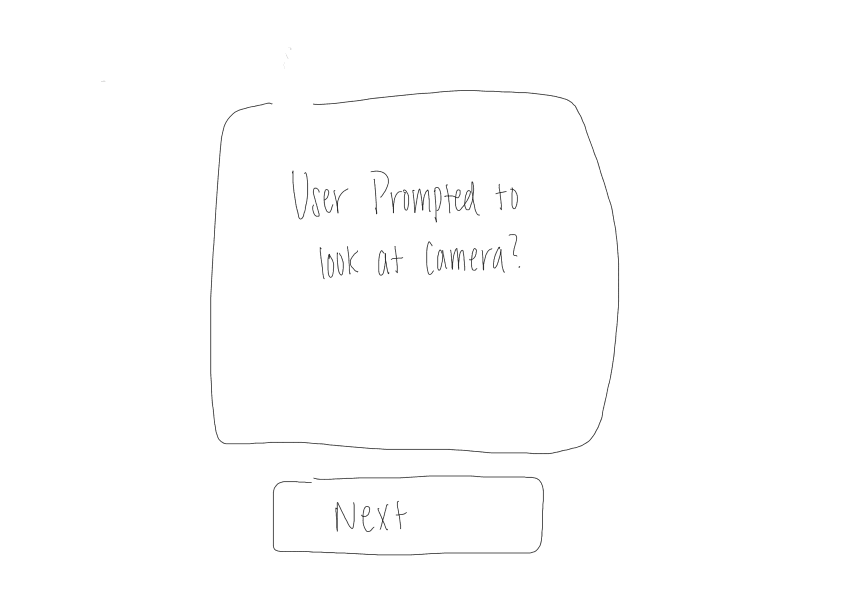

Paper Prototyping
Our low-fidelity paper prototype explored early flows for outfit personalization and tested how users navigated key steps. Feedback showed the experience was intuitive, with suggestions like adding a back feature, leading us to refine the flow to better guide users through a complete and personalized process.
thanks for stopping by!